About Us
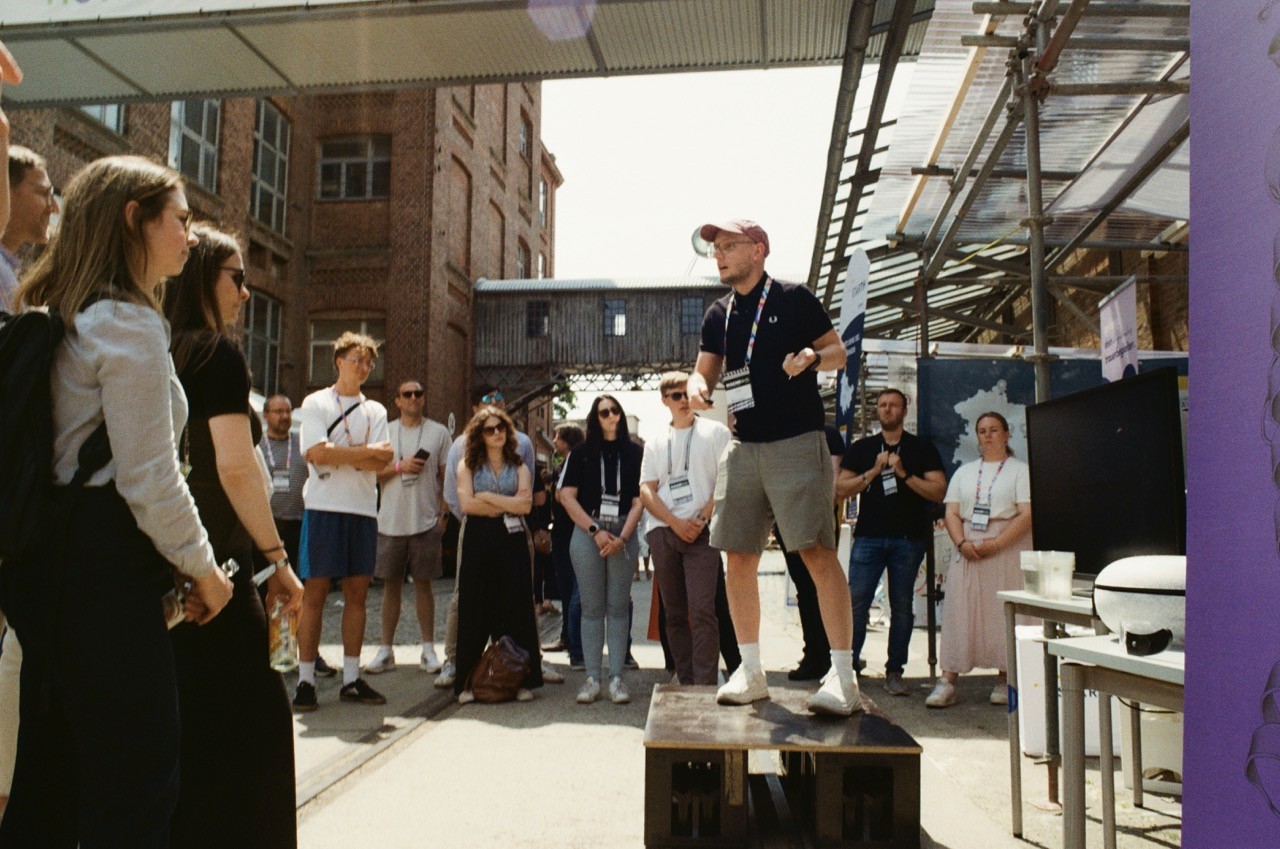
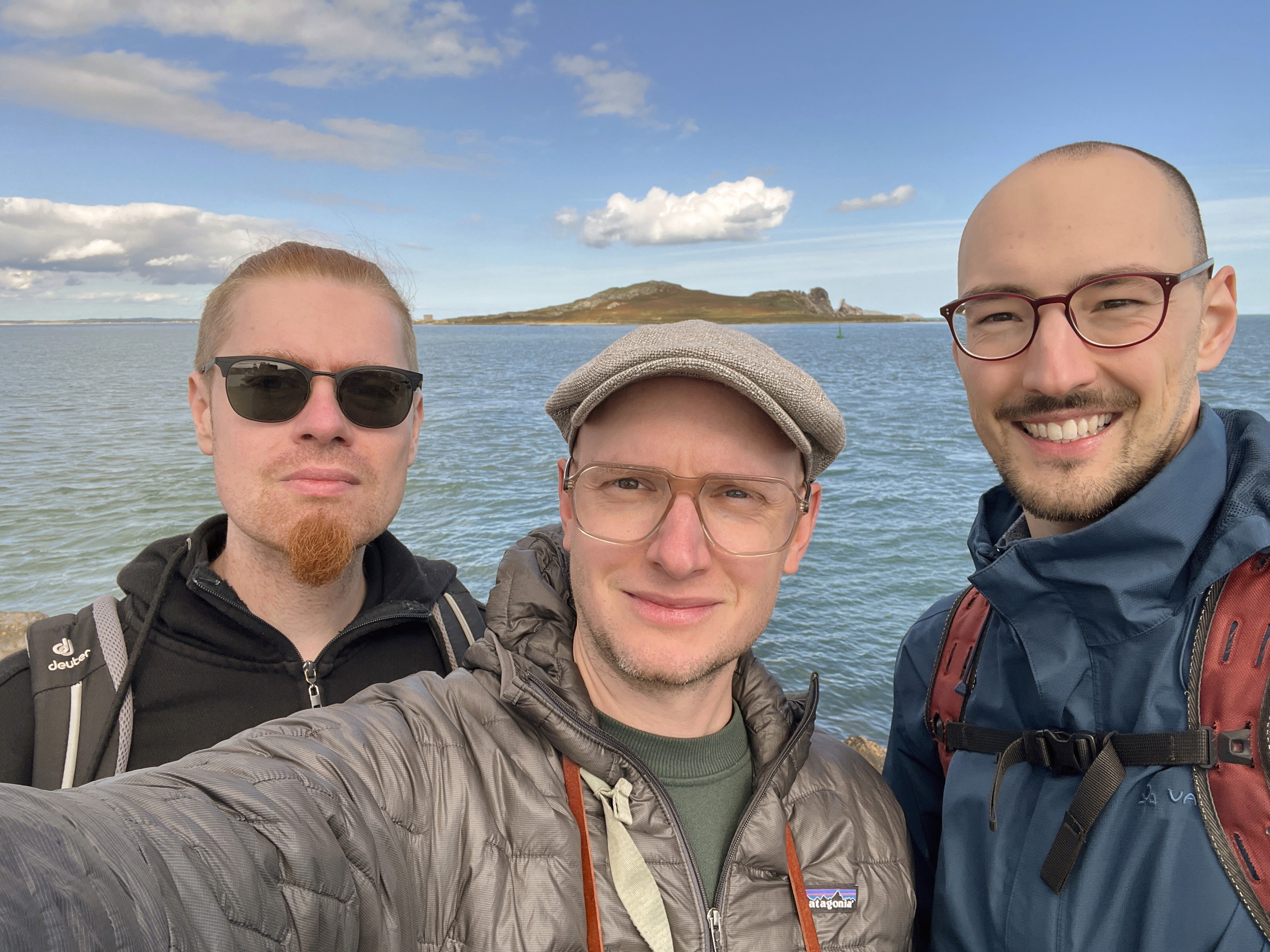
Our first trip abroad – market exploration in Dublin.
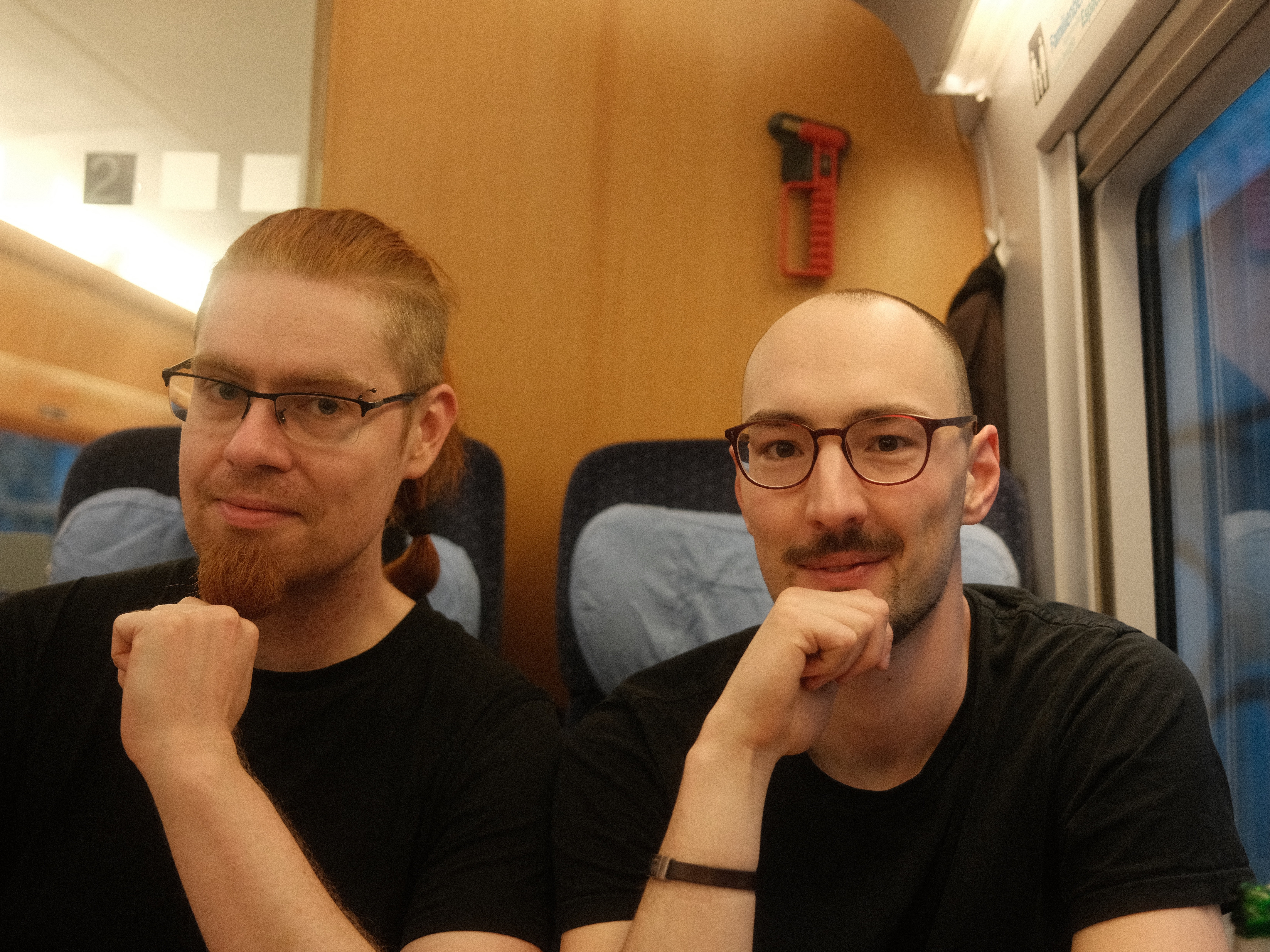
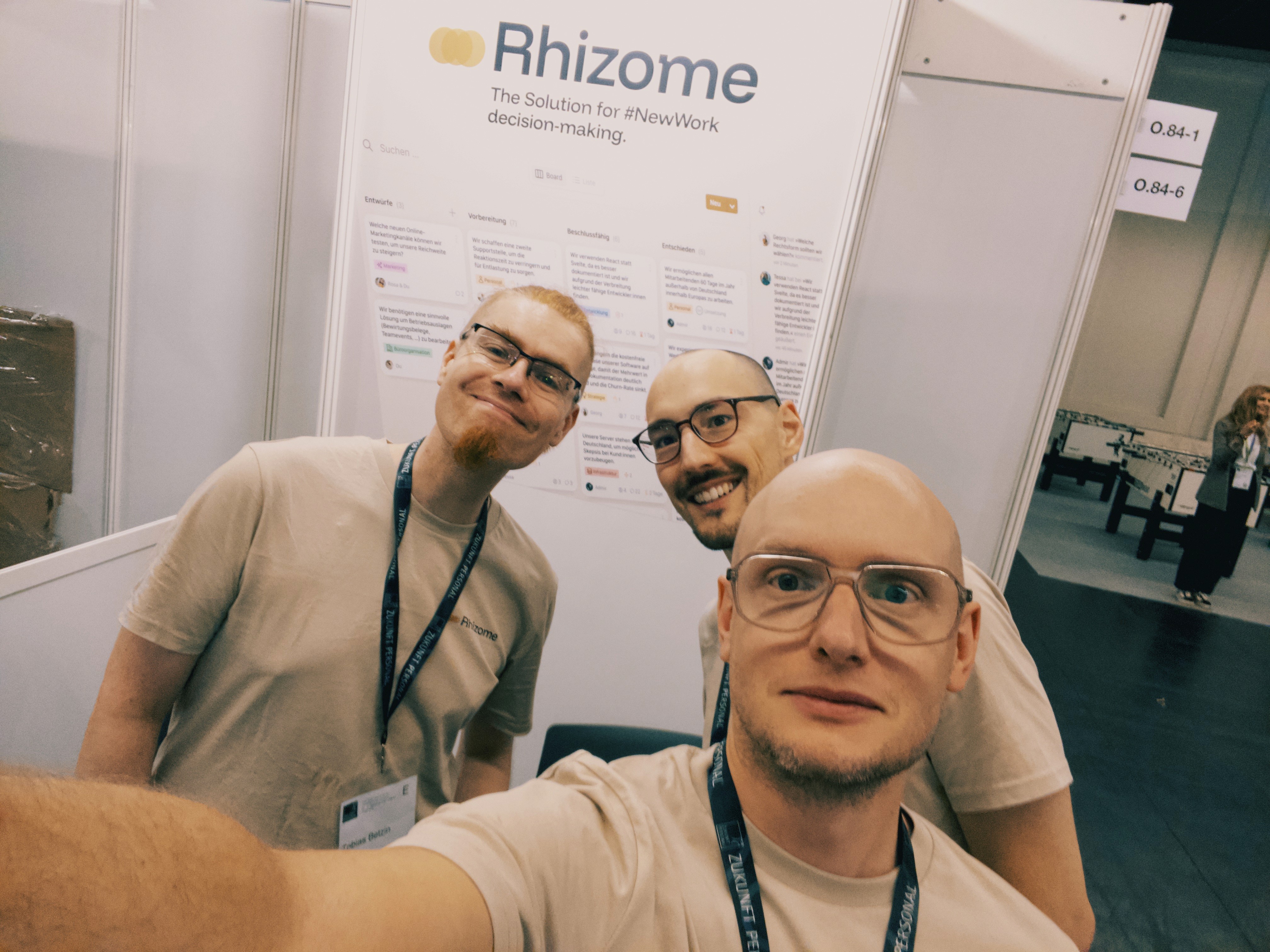
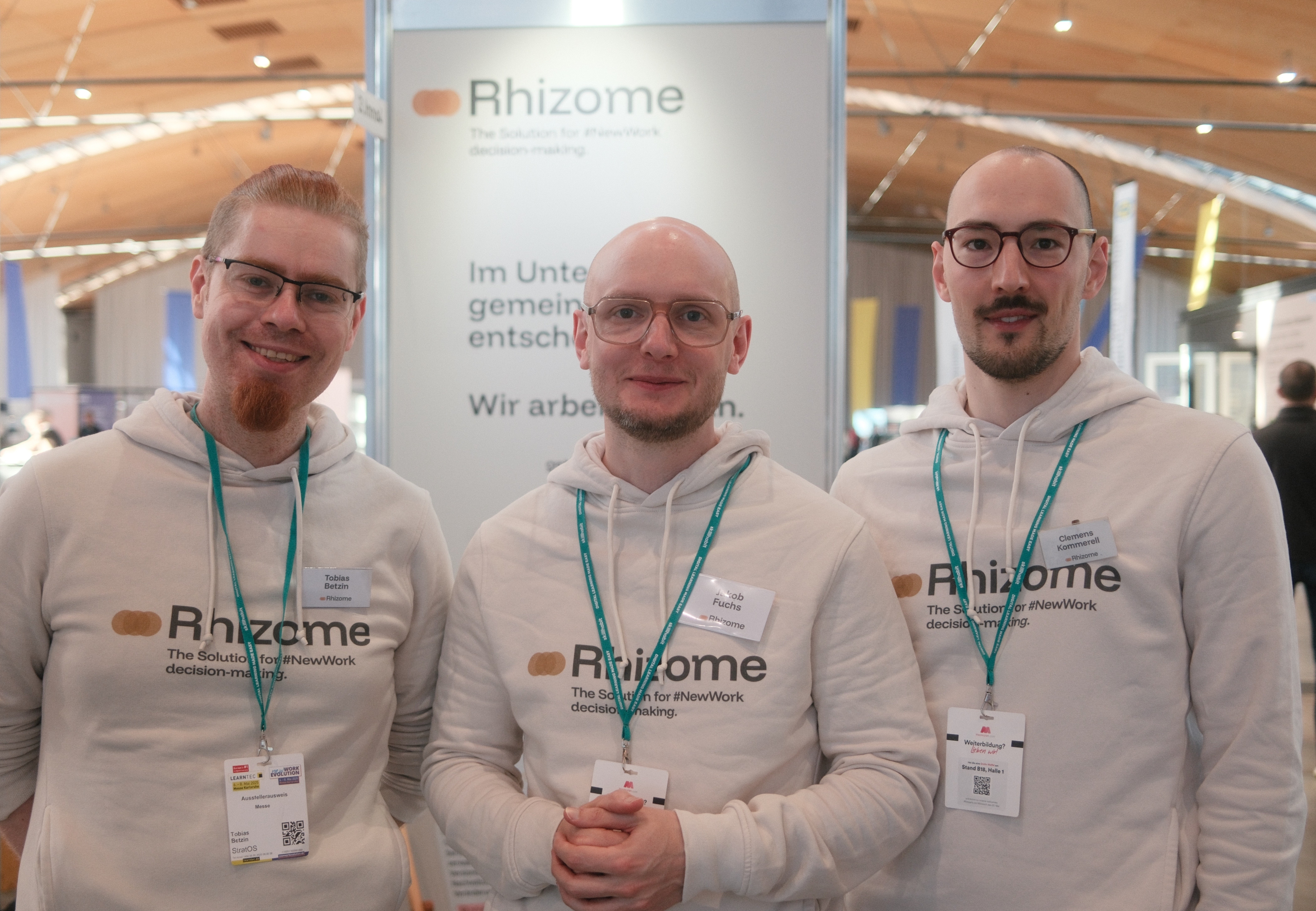
First day of the first trade fair appearance.
Hey! We are Clemens, Jakob, and Tobi. #feelFreeToAddressUsInformally
Rhizome is the English term for the root system that plants like ginger or bamboo form. It grows horizontally rather than vertically and has no center, forming countless cross-connections – and is therefore resilient to damage or division. This name already embodies much of our vision.
How it all began
In 2019/20, Clemens and Jakob investigated how organizations really make decisions for their joint master's thesis titled "Decisions in Organizations." We visited organizations, accompanied decision-makers, and read extensively from Luhmann, Baecker, Kühl, and Porter.
Our conclusion: While almost everything has been digitized, decision-making processes have not. The energy for good decisions dissipates between emails, chat messages, and meeting marathons. Decisions take weeks - or are being made casually, without involving the right people.
After stints in agencies, consultancies, NGOs, and scale-ups, we left our jobs. At the beginning of 2025, the three of us set out: We want to foster the sense of belonging in teams, make the individual more effective, and strengthen the agency and resilience of organizations in a complex world. Our answer to this is Rhizome – software that simplifies co-creative decision-making. Structured, transparent, and asynchronous.
Our Principles
We want to be part of the solution
Our servers comply with GDPR and are located in Germany, powered by 100% green hydroelectricity. In our organizational daily life, we make sure to use open-source applications and services from Germany and the EU whenever possible.
Your data belongs to you. You can export it at any time and take it with you. We are not building a prison.
With Rhizome, we aim to democratize the economy—for its own good and for the people within it.
We develop for people with different needs and put a special emphasis on accessibility. Our homepage and app are not yet fully accessible – but we are working on it.
Rhizome does not show online status. We respect your attention and only direct it where it is truly needed for collaboration.
We set our own sustainability goals and work towards modern diversity standards. We are not perfect, but we are working on it.
“Trust the social fabric”
Rhizome is “situated software” – developed for a specific social situation (making decisions) in a specific context (teams, collectives).
Software developers constantly rely on the cognitive abilities of individual users, but rarely on those of groups. Yet, people do this in the real world all the time: groups know a lot about themselves. Team members know who to turn to for which issue – without these roles being formally established.
In the past, we have caught ourselves multiple times designing mechanisms restrictively to exclude even the smallest possibility of misuse. Now we have decided to trust instead: people who use Rhizome have skin in the game, usually know each other, and pursue common goals. We build infrastructure for people who can treat each other like adults.
We are not tech solutionists
Decisions are communication processes. Rhizome structures this communication and makes voices heard. But software does not replace a culture of trust, willingness to engage in conversation, or honesty. Technology is a tool, never the sole solution.
This is especially true for AI: Artificial intelligence is artificial, communication is human. We may experiment with summarizing human communication through AI or discovering connections in the future – but: “A computer can never be held accountable; therefore, a computer must never make a management decision.” (IBM, 1970s)
We stand on the shoulders of giants
Rhizome builds on our academic work/research on decisions. We make daily product decisions based on the work of countless people who are more experienced and smarter than we are. We combine these ideas with our own and make them usable for organizations in everyday life. In software development, we benefit from countless open-source libraries.
We strive for transparency
We learn from your feedback and share what is coming next – and what is not. We communicate openly about mistakes, setbacks, and successes. You trust us with your decision-making processes, and we take this responsibility seriously.
If you feel that we are deviating from our principles: Let us know.